






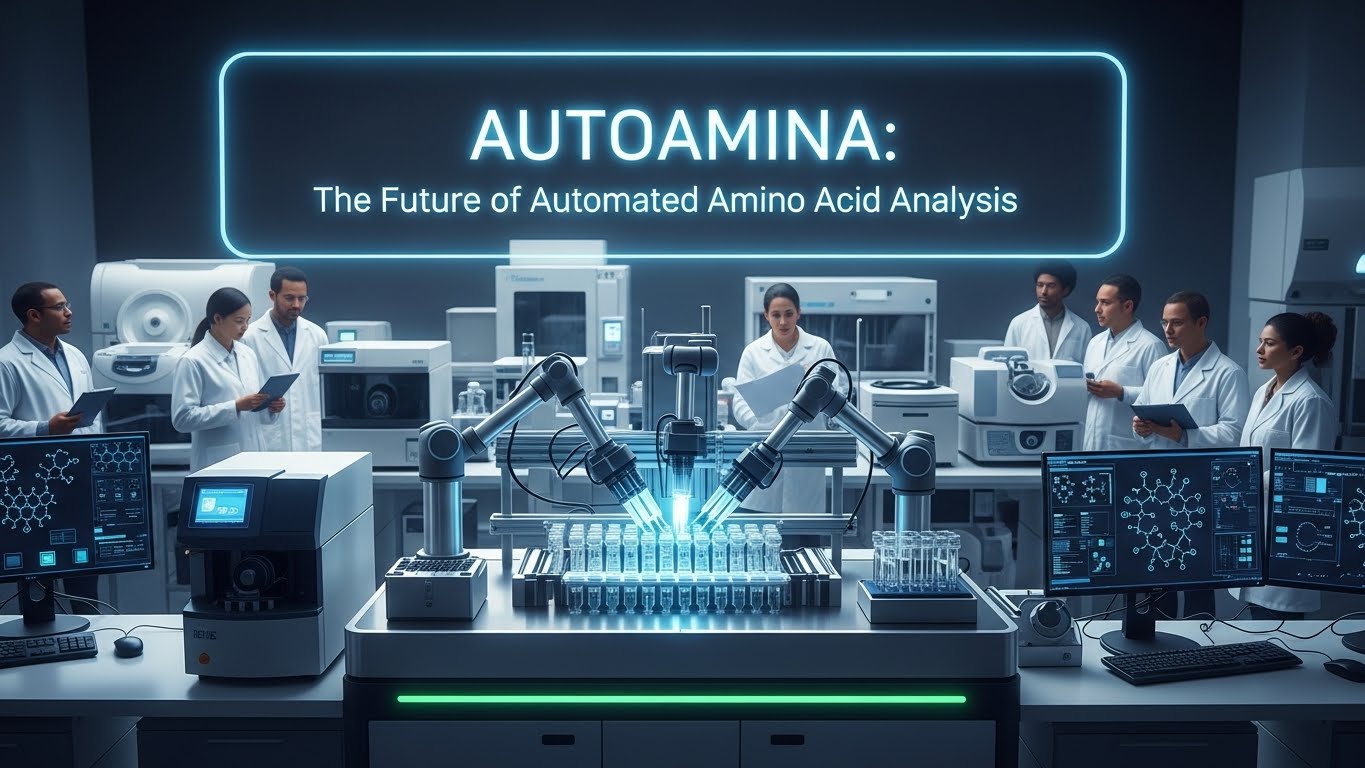
The world of amino acid analysis is evolving, and at the forefront of this transformation is Autoamina. As a cutting-edge automated system, Autoamina promises to revolutionize how we analyze amino acids in various samples. Gone are the days of lengthy processes and labor-intensive methods that often lead to inaccuracies. With technology advancing rapidly, stakeholders across multiple industries are beginning to realize just how crucial efficient and reliable amino acid analysis can be for their operations.
From pharmaceuticals to food science, understanding amino acid composition plays an essential role in quality control, nutritional labeling, and research. The importance of accurate data cannot be overstated; it influences everything from product development to compliance with regulatory standards. As we delve deeper into what makes Autoamina such a game-changer in the field of automated amino acid analysis, you’ll discover not only its mechanics but also its far-reaching implications across diverse sectors. Let’s explore why Autoamina might just be the future you’ve been waiting for!
The Traditional Method of Amino Acid Analysis
The traditional method of amino acid analysis primarily relies on techniques such as ion-exchange chromatography and paper chromatography. These methods, though effective, often require extensive manual intervention.
Sample preparation is time-consuming. It involves hydrolyzing proteins to release free amino acids before the actual analysis can begin. This step alone can take hours or even days, depending on the sample complexity.
Afterward, separation occurs in a lengthy process that requires careful calibration and monitoring. The precision involved demands skilled technicians who must interpret results manually.
Moreover, these methods may lack sensitivity for detecting certain amino acids at low concentrations. As a result, some crucial data might go unnoticed.
Such limitations lead researchers to seek more efficient solutions that streamline operations without sacrificing accuracy or reliability in the analysis of amino acids.
Limitations of Traditional Amino Acid Analysis Methods
Traditional amino acid analysis methods often rely on time-consuming and labor-intensive processes. These techniques, such as ion-exchange chromatography or liquid chromatography, require extensive sample preparation.
This can lead to potential errors during handling. The need for multiple steps increases the risk of contamination and degradation of sensitive samples.
Moreover, traditional methods frequently struggle with sensitivity limits. They may miss low-abundance amino acids that could be crucial in certain analyses.
Another drawback is the requirement for specialized equipment and trained personnel. Not all laboratories have access to this costly infrastructure, limiting widespread application.
Additionally, the turnaround time can be quite lengthy. This delays results in contexts where rapid analysis is essential for decision-making.
These limitations highlight a pressing need for more efficient solutions in amino acid analysis—enter Autoamina.
How Autoamina Works: An Overview
Autoamina leverages cutting-edge technology to streamline amino acid analysis. By utilizing advanced algorithms and artificial intelligence, it automates the process of identifying and quantifying amino acids in various samples.
The system begins by preparing a sample for analysis. This involves precise extraction techniques that ensure accuracy and reliability. Once prepared, Autoamina analyzes the sample using sophisticated chromatographic methods.
Data is collected rapidly, often in real-time, allowing researchers to gain insights without long waiting periods. The software interprets these results with impressive speed, offering clarity on amino acid profiles.
What sets Autoamina apart is its ability to minimize human error. Automation reduces inconsistencies often seen in manual procedures. With user-friendly interfaces, scientists can easily interact with data and obtain detailed reports instantly.
This seamless integration of technology makes Autoamina an invaluable tool in laboratories worldwide.
Advantages of Autoamina over Traditional Methods
Autoamina offers several compelling advantages compared to traditional amino acid analysis methods.
It significantly reduces analysis time. Traditional techniques can take hours or even days to provide results, while Autoamina delivers quick and efficient outcomes. This speed is crucial for researchers needing rapid data for experiments or product development.
Moreover, the accuracy of Autoamina stands out. Traditional methods often involve subjective interpretations and manual processes that can lead to errors. In contrast, Autoamina employs automated systems that enhance precision and reliability in measurements.
Cost-effectiveness is another key benefit. By streamlining the process and minimizing human intervention, organizations can save both time and resources with Autoamina’s technology.
Additionally, this innovative method requires smaller sample sizes than conventional approaches. This feature makes it particularly advantageous for studies where material availability may be limited or expensive to obtain.
These factors combined position Autoamina as a transformative tool in amino acid analysis across various fields.
Applications of Autoamina in Various Industries
Autoamina is making waves across various sectors. In the pharmaceutical industry, it offers rapid and precise analysis of amino acids in drug formulations, ensuring optimal therapeutic efficacy.
Food science benefits immensely as well. Quality control teams use Autoamina to evaluate protein content in products like dairy and meat, enhancing nutritional transparency for consumers.
The biotechnology sector harnesses this technology to streamline research processes. Accurate amino acid profiling accelerates the development of new enzymes and vaccines.
In agriculture, Autoamina aids in formulating animal feeds that maximize growth potential while minimizing waste. This leads to more sustainable farming practices.
Moreover, sports nutrition has embraced this innovation for personalized dietary plans tailored to athletes’ unique needs. With such diverse applications, Autoamina is poised to transform industries by providing faster results with greater accuracy.
Future Developments and Implications
As the field of amino acid analysis evolves, Autoamina is poised to integrate even more advanced technologies. Innovations in artificial intelligence and machine learning could enhance data interpretation and accuracy.
Researchers are exploring the potential for real-time analysis using portable devices. This capability would allow scientists to perform tests on-site, significantly speeding up research processes.
Collaboration with biotechnology firms may also lead to new applications across various sectors. From pharmaceuticals to food science, the implications of faster and more accurate amino acid profiling are vast.
Additionally, increasing awareness about nutrition and health can drive demand for personalized dietary plans based on amino acid profiles. The future looks bright as Autoamina continues its journey toward becoming a standard tool in laboratories worldwide.
Conclusion
Autoamina represents a significant leap forward in the field of amino acid analysis. Its innovative approach addresses many of the shortcomings associated with traditional methods, providing more accurate and timely results. As industries from pharmaceuticals to food production seek efficiency and precision, Autoamina stands out as a game-changer.
The technology not only streamlines processes but also opens new avenues for research and development across various sectors. With ongoing advancements on the horizon, Autoamina is poised to redefine how we understand proteins and their impact on health, nutrition, and beyond.
As this technology continues to evolve, its potential applications seem limitless. The future looks bright for Autoamina—and those who embrace it will likely stay ahead in an ever-competitive landscape.